Portable vs Stationary Diesel Generators: Which Do You Need?
One moves, one stays and starts itself. Here's how to decide between a portable and a stationary diesel generator.
By Hanson Hire
Quick Answer
Portable diesel generators (5-10kVA) are wheel-mounted, manually started and moved between sites - best for trade, construction and occasional backup. Stationary diesel generators (10kVA+) are fixed, enclosed and auto-start via an ATS - best for home, business and industrial standby. Choose portable if you move it; choose stationary if it stays put and must start itself.
The Real Difference: Mobility vs Automation
The choice between a portable and a stationary diesel generator comes down to two things: do you need to move it, and does it need to start itself?
Portable Diesel Generators
Portable diesel generators are mounted on wheels or a frame, started manually (electric start), and connected via a lead or inlet. You move them to where the power is needed.
Best for:
- Construction and trade sites
- Events and outdoor work
- Occasional home or farm backup
- Hire fleets
Examples:
- Genelite GYD5000E 6.5kVA Yanmar - hire-duty portable diesel
- Genelite GHD6400E-H 8kVA - larger portable for trade
- Kubota GL9000 8kVA Long Range - all-day running
- Hyundai DHY6000SE 6.5kVA - popular home/trade portable
Stationary Diesel Generators
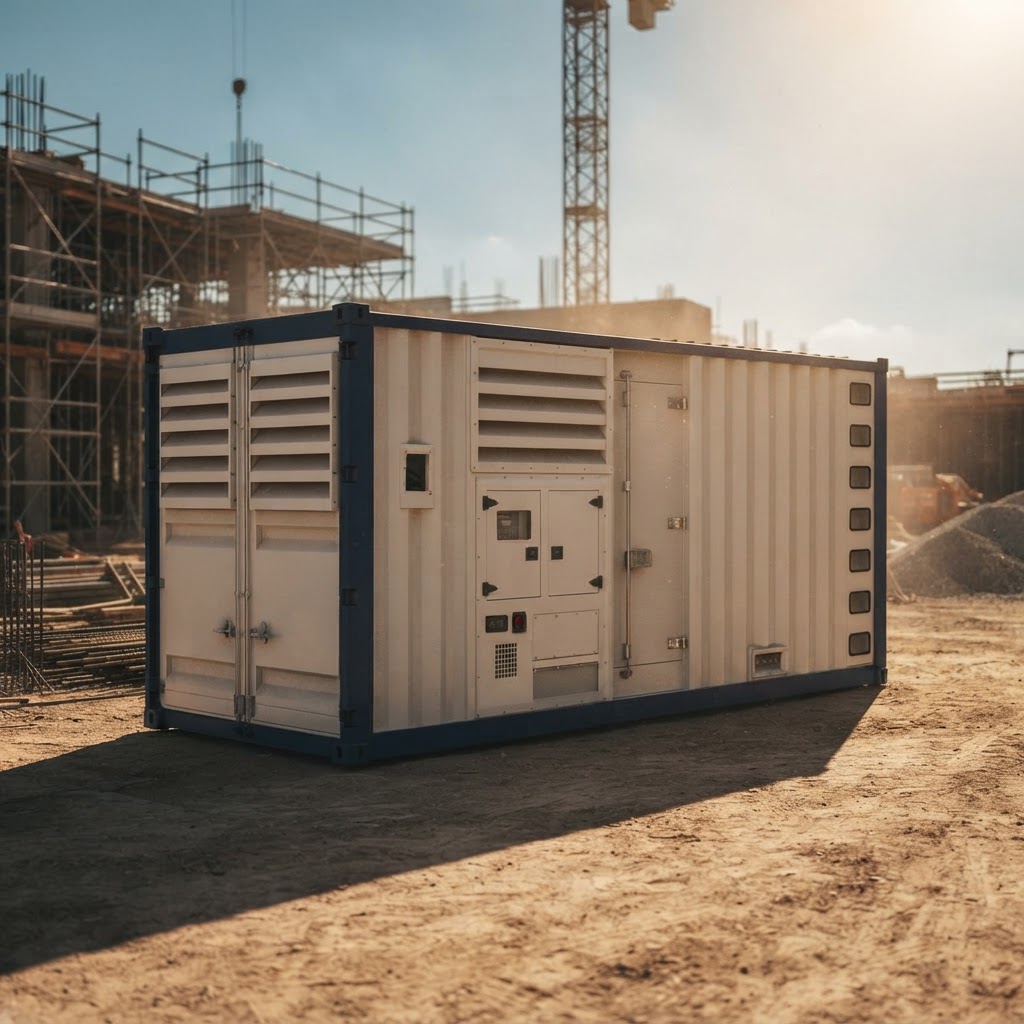
Stationary generators are permanently installed in a fixed location, enclosed in a soundproof canopy, and wired to your switchboard with an ATS. They start automatically on power failure.
Best for:
- Home and business standby
- Facilities that cannot lose power
- Unattended operation
- Noise-sensitive locations
Examples:
- Hyundai DHY9KSEM 11kVA Standby - home standby
- Kubota SQ1120 11.8kVA - quiet standby
- Hyundai DHY11KSEM 14kVA Three-Phase - commercial standby
Comparison
| | Portable | Stationary | | --- | --- | --- | | Mobility | Yes, wheeled | Fixed install | | Start | Manual electric start | Automatic via ATS | | Enclosure | Open or roll cage | Soundproof canopy | | Best for | Trade, hire, occasional backup | Standby, unattended | | Cost | Lower (no install) | Higher (install + ATS) | | Noise | Louder | Quieter (canopy) |
Which Should You Choose?
- You move between sites -> portable
- You want it to start when you are not home -> stationary + ATS
- Budget matters and you are home to start it -> portable
- Noise is a concern (residential) -> stationary (soundproof canopy)
Not sure? Get a quote and we will recommend the right type, or browse the range. Use our size calculator to estimate kVA first.
Frequently Asked Questions
Common Questions
Shop generators for sale
Browse our full range of diesel and petrol generators for sale, with delivery across Melbourne and Victoria.
Browse the storeWritten by
Hanson Hire
Melbourne's trusted generator hire, sales and complete power services. ABN 56 684 753 875.
Learn more about usNeed a generator for your site?
Get an instant quote or talk to our team about your power requirements.
Related Articles
More in Buying Guides
Best Generators for Home Backup in 2026
The best generators for home backup in 2026, from portable inverter units for essentials to automatic standby generators with ATS for whole-home protection.
Hire vs Buy a Generator: Which Makes Financial Sense?
Hire for one-off jobs and flexibility; buy for regular use and standby backup. Here's how to work out the break-even point and choose the right option.
Inverter vs Conventional Generators: What's the Difference?
Inverter generators produce clean, quiet power safe for electronics; conventional generators are cheaper and handle heavy loads. Here's how to choose.